London Jack

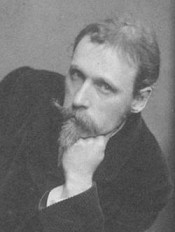
Jack London (January 12, 1876 – November 22, 1916)[1][2][3][4] was an American author who wrote The Call of the Wild, White Fang, and The Sea Wolf along with many other popular books. A pioneer in the then-burgeoning world of commercial magazine fiction, he was one of the first Americans to make a lucrative career exclusively from writing.[5] London's mother, Flora Wellman, a music teacher and spiritualist who claimed to channel the spirit of an Indian chief, became pregnant, presumably from her union with William Chaney, an astrologer she lived with in San Francisco. According to Flora Wellman's account as recorded in the San Francisco Chronicle of June 4, 1875, Chaney demanded that she have an abortion, and when she refused, he disclaimed responsibility for the child. In desperation, she shot herself. She was not seriously wounded, but she was temporarily deranged. After she gave birth, Flora turned the baby over to ex-slave Virginia Prentiss, who would remain a major maternal figure throughout London's life. Late in 1876, Flora Wellman married John London, a partially disabled Civil War veteran, and baby John, later known as Jack, came to live with the newly married couple. The family moved around the San Francisco Bay Area before settling in Oakland, where London completed grade school. In 1897, when he was 21 and a student at the University of California, Berkeley, London searched for and read the newspaper accounts of his mother's suicide attempt and the name of his biological father. He wrote to William Chaney, then living in Chicago. Chaney responded that he could not be London's father because he was impotent; he casually asserted that London's mother had relations with other men and averred that she had slandered him when she said he insisted on an abortion. In fact, he concluded, he was more to be pitied than London.[6] London was devastated. In the months following his discovery of his origins, he quit school at Berkeley and went to the Klondike. Biographer Clarice Stasz and others believe that London's father was astrologer William Chaney.[7] Whether Wellman and Chaney were legally married is unknown. Most San Francisco civil records were destroyed by the vast fires which followed the 1906 earthquake. For the same reason, it is not known with certainty what name appeared on his birth certificate. Stasz notes that in his memoirs Chaney refers to London's mother Flora Wellman as having been his "wife" and also cites an advertisement in which Flora calls herself "Florence Wellman Chaney". London was born near Third and Brannan Streets in San Francisco. The house in which London was born burned down in the fire after the 1906 San Francisco earthquake, and a plaque was placed at this site by the California Historical Society in 1953. Though the family was working class, it was not as impoverished as London's later accounts claimed. London was essentially self-educated. He taught himself in the public library, mainly just by reading books. In 1885 he found and read Ouida's long Victorian novel Signa, which describes an unschooled Italian peasant child who achieves fame as an opera composer. He credited this as the seed of his literary success.[8] An important event was his discovery in 1886 of the Oakland Public Library and a sympathetic librarian, Ina Coolbrith (who later became California's first poet laureate and an important figure in the San Francisco literary community). In 1889, London began working 12 to 18 hours a day at Hickmott's Cannery. Seeking a way out of this grueling labor, he borrowed money from his black foster-mother Virginia Prentiss, bought the sloop Razzle-Dazzle from an oyster pirate named French Frank, and became an oyster pirate himself. In John Barleycorn he claims to have stolen French Frank's mistress Mamie.[9][10][11] After a few months his sloop became damaged beyond repair. He switched to the side of the law and became a member of the California Fish Patrol. In 1893, he signed on to the sealing schooner Sophie Sutherland, bound for the coast of Japan. When he returned, the country was in the grip of the panic of '93 and Oakland was swept by labor unrest. After grueling jobs in a jute mill and a street-railway power plant, he joined Kelly's Army and began his career as a tramp. In 1894, he spent 30 days for vagrancy in the Erie County Penitentiary at Buffalo. In The Road, he wrote: "Man-handling was merely one of the very minor unprintable horrors of the Erie County Pen. I say 'unprintable'; and in justice I must also say undescribable. They were unthinkable to me until I saw them, and I was no spring chicken in the ways of the world and the awful abysses of human degradation. It would take a deep plummet to reach bottom in the Erie County Pen, and I do but skim lightly and facetiously the surface of things as I there saw them." After many experiences as a hobo, and as a sailor, he returned to Oakland and attended Oakland High School, where he contributed a number of articles to the high school's magazine, The Aegis. His first published work was "Typhoon off the coast of Japan", an account of his sailing experiences. London desperately wanted to attend the University of California, Berkeley, and, in 1896 after a summer of intense cramming, did so; but financial circumstances forced him to leave in 1897 and so he never graduated. Kingman says that "there is no record that Jack ever wrote for student publications".[12] On July 12, 1897, London and his brother-in-law, James Shepard, sailed to join the Klondike Gold Rush where he would later set his first successful stories. London's time in the Klondike, however, was quite detrimental to his health. Like so many others malnourished in the Klondike Gold Rush, he developed scurvy. His gums became swollen, eventually leading to the loss of his four front teeth. A constant gnawing pain affected his hip and leg muscles, and his face was stricken with marks that would forever remind him of the struggles he faced in the Klondike. Fortunately for him and others who were suffering with a variety of medical ills, Father William Judge, "The Saint of Dawson," had a facility in Dawson which provided shelter, food and any available medicine. London survived the hardships of the Klondike, and these struggles inspired what is often called his best short story, To Build a Fire. His landlords in Dawson were two Yale and Stanford-educated mining engineers Marshall Latham Bond and Louis Whitford Bond. Their father Judge Hiram Bond was a wealthy mining investor. The Bonds, especially Hiram, were active Republicans. Marshall Bond's diary mentions friendly sparring on political issues as a camp pastime. London left Oakland a believer in the work ethic with a social conscience and socialist leanings and returned to become an active proponent of socialism. He also concluded that his only hope of escaping the work trap was to get an education and "sell his brains." Throughout his life he saw writing as a business, his ticket out of poverty, and, he hoped, a means of beating the wealthy at their own game. On returning to California in 1898, he began struggling seriously to break into print, a struggle memorably described in his novel, Martin Eden. His first published story was the fine and frequently anthologized "To the Man On Trial." When The Overland Monthly offered him only five dollars for it—and was slow paying—London came close to abandoning his writing career. In his words, "literally and literarily I was saved" when The Black Cat accepted his story "A Thousand Deaths," and paid him $40—the "first money I ever received for a story." London was fortunate in the timing of his writing career. He started just as new printing technologies enabled lower-cost production of magazines. This resulted in a boom in popular magazines aimed at a wide public, and a strong market for short fiction. In 1900, he made $2,500 in writing, the equivalent of approximately $51,000 in 2000 (using [13]). His career was well under way. Among the works he sold to magazines was a short story known as either "Batard" or "Diable" in two editions of the same basic story. A cruel French Canadian brutalizes his dog. The dog, out of revenge, kills the man. He told some of his critics that man's actions are the main cause of the behavior of their animals, and he would show this in another short story. "On January 26, 1903, Jack London submitted the completed manuscript of The Call of the Wild to The Saturday Evening Post. On February 12 the editor agreed to purchase the story if he would cut it by five thousand words, and they asked him to set his price. Jack agreed to shorten it and set the price at three cents a word. On March 3 he received a check for seven hundred and fifty dollars. Twenty-two days later Macmillan bought the book rights for two thousand dollars with a promise to give it extensive advertising. At the time it seemed a very sensible thing to do. His previous books had not hit the best seller lists, and neither he nor Macmillan New York publisher George Platt Brett, Sr. had any idea that The Call of the Wild would do much better. If Jack had known at the time that his book would become a classic in American literature, and the royalties from it would have made him wealthy, he would have bargained differently. Yet, without the extensive promotional program, it could have easily become just another dog book. The answer will never be known, but Jack never regretted his decision, feeling that the extra promotion by Macmillan had been a major factor in its success." [14] This short story for the Saturday Evening Post The Call of the Wild ran away in length. The story begins on an estate in Santa Clara Valley and features a St. Bernard/Scotch Shepherd mix named Buck. In fact the opening scene is a description of the Bond family farm and Buck is based on a dog he was lent in Dawson by his landlords. London visited Marshall Bond in California having run into him again at a political lecture in San Francisco in 1901. While living at his rented villa on Lake Merritt in Oakland, London met poet George Sterling and in time they became best friends. In 1902, Sterling helped London find a home closer to his own in nearby Piedmont. In his letters London addressed Sterling as "Greek" owing to his aquiline nose and classical profile, and signed them as "Wolf." London was later to depict Sterling as Russ Brissenden in his autobiographical novel Martin Eden (1909) and as Mark Hall in The Valley of the Moon (1913).



Users Who added
to favorites

if you like London Jack try:
Users Who added
to favorites
Do you want to read a book that interests you? It’s EASY!
Create an account and send a request for reading to other users on the Webpage of the book!

