Lawrence David Herbert
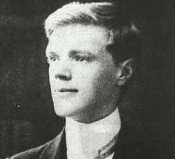
David Herbert Richards Lawrence (11 September 1885 – 2 March 1930) was an English author, poet, playwright, essayist and literary critic. His collected works represent an extended reflection upon the dehumanising effects of modernity and industrialisation. In them, Lawrence confronts issues relating to emotional health and vitality, spontaneity, human sexuality and instinct. Lawrence's opinions earned him many enemies and he endured official persecution, censorship, and misrepresentation of his creative work throughout the second half of his life, much of which he spent in a voluntary exile he called his "savage pilgrimage."[1] At the time of his death, his public reputation was that of a pornographer who had wasted his considerable talents. E. M. Forster, in an obituary notice, challenged this widely held view, describing him as, "The greatest imaginative novelist of our generation."[2] Later, the influential Cambridge critic F. R. Leavis championed both his artistic integrity and his moral seriousness, placing much of Lawrence's fiction within the canonical "great tradition" of the English novel. Lawrence is now generally valued as a visionary thinker and significant representative of modernism in English literature, although some feminists object to the attitudes toward women and sexuality found in his works. The fourth child of Arthur John Lawrence, a barely literate miner, and Lydia (née Beardsall), a former schoolmistress,[3] Lawrence spent his formative years in the coal mining town of Eastwood, Nottinghamshire. The house in which he was born, in Eastwood, 8a Victoria Street, is now the D.H. Lawrence Birthplace Museum.[4] His working class background and the tensions between his parents provided the raw material for a number of his early works. Lawrence would return to this locality, which he was to call "the country of my heart,"[5] as a setting for much of his fiction. The young Lawrence attended Beauvale Board School (now renamed Greasley Beauvale D. H. Lawrence Primary School in his honour) from 1891 until 1898, becoming the first local pupil to win a County Council scholarship to Nottingham High School in nearby Nottingham. There is a house in the junior school named after him. He left in 1901, working for three months as a junior clerk at Haywood's surgical appliances factory, but a severe bout of pneumonia, the result from being accosted by a group of factory girls, ended this career. Whilst convalescing he often visited Hagg's Farm, the home of the Chambers family and began a friendship with Jessie Chambers. An important aspect of this relationship with Jessie and other adolescent acquaintances was a shared love of books, an interest that lasted throughout Lawrence's life. In the years 1902 to 1906 Lawrence served as a pupil teacher at the British School, Eastwood. He went on to become a full-time student and received a teaching certificate from University College Nottingham in 1908. During these early years he was working on his first poems, some short stories, and a draft of a novel, Laetitia, that was eventually to become The White Peacock. At the end of 1907 he won a short story competition in the Nottingham Guardian, the first time that he had gained any wider recognition for his literary talents. In the autumn of 1908 the newly qualified Lawrence left his childhood home for London. While teaching in Davidson Road School, Croydon, he continued writing. Some of the early poetry, submitted by Jessie Chambers, came to the attention of Ford Madox Ford, then known as Ford Hermann Hueffer and editor of the influential The English Review. Hueffer then commissioned the story Odour of Chrysanthemums which, when published in that magazine, encouraged Heinemann, a London publisher, to ask Lawrence for more work. His career as a professional author now began in earnest, although he taught for a further year. Shortly after the final proofs of his first published novel The White Peacock appeared in 1910, Lawrence's mother died. She had been ill with cancer. The young man was devastated and he was to describe the next few months as his "sick year." It is clear that Lawrence had an extremely close relationship with his mother and his grief following her death became a major turning point in his life, just as the death of Mrs. Morel forms a major turning point in his autobiographical novel Sons and Lovers, a work that draws upon much of the writer's provincial upbringing. In 1911 Lawrence was introduced to Edward Garnett, a publisher's reader, who acted as a mentor, provided further encouragement, and became a valued friend, as Garnett's son David was also. Throughout these months the young author revised Paul Morel, the first draft of what became Sons and Lovers. In addition, a teaching colleague, Helen Corke, gave him access to her intimate diaries about an unhappy love affair, which formed the basis of The Trespasser, his second novel. In November 1911, pneumonia struck once again. After recovering his health Lawrence decided to abandon teaching in order to become a full time author. He also broke off an engagement to Louie Burrows, an old friend from his days in Nottingham and Eastwood. In March 1912 Lawrence met Frieda Weekley (nee von Richthofen), with whom he was to share the rest of his life. She was six years older than her new lover, married to Lawrence's former modern languages professor from Nottingham University, Ernest Weekley, and with three young children. She eloped with Lawrence to her parents' home in Metz, a garrison town then in Germany near the disputed border with France. Their stay here included Lawrence's first brush with militarism, when he was arrested and accused of being a British spy, before being released following an intervention from Frieda Weekley's father. After this encounter Lawrence left for a small hamlet to the south of Munich, where he was joined by Weekley for their "honeymoon", later memorialised in the series of love poems entitled Look! We Have Come Through (1917). From Germany they walked southwards across the Alps to Italy, a journey that was recorded in the first of his travel books, a collection of linked essays entitled Twilight in Italy and the unfinished novel, Mr Noon. During his stay in Italy, Lawrence completed the final version of Sons and Lovers that, when published in 1913, was acknowledged to represent a vivid portrait of the realities of working class provincial life. Lawrence though, had become so tired of the work that he allowed Edward Garnett to cut about a hundred pages from the text. Lawrence and Frieda returned to England in 1913 for a short visit. At this time, he now encountered and befriended critic John Middleton Murry and New Zealand-born short story writer Katherine Mansfield. Lawrence and Weekley soon went back to Italy, staying in a cottage in Fiascherino on the Gulf of Spezia. Here he started writing the first draft of a work of fiction that was to be transformed into two of his better-known novels, The Rainbow and Women in Love. Eventually, Weekley obtained her divorce. The couple returned to England at the outbreak of World War I and were married on 13 July, 1914. In this time, Lawrence worked with London intellectuals and writers such as Dora Marsden and the people involved with The Egoist (T.S. Eliot, Ezra Pound, and others). The Egoist, an important Modernist literary magazine, published some of his work. He was also reading and adapting Marinetti's Futurist Manifesto.[6] Weekley's German parentage and Lawrence's open contempt for militarism meant that they were viewed with suspicion in wartime England and lived in near destitution. The Rainbow (1915) was suppressed after an investigation into its alleged obscenity in 1915. Later, they were even accused of spying and signaling to German submarines off of the coast of Cornwall where they lived at Zennor. During this period he finished Women in Love. In it Lawrence explores the destructive features of contemporary civilization through the evolving relationships of four major characters as they reflect upon the value of the arts, politics, economics, sexual experience, friendship and marriage. This book is a bleak, bitter vision of humanity and proved impossible to publish in wartime conditions. Not published until 1920, it is now widely recognised as an English novel of great dramatic force and intellectual subtlety. In late 1917, after constant harassment by the armed forces authorities, Lawrence was forced to leave Cornwall at three days' notice under the terms of the Defence of the Realm Act (DORA). This persecution was later described in an autobiographical chapter of his Australian novel Kangaroo, published in 1923. He spent some months in early 1918 in the small, rural village of Hermitage near Newbury, Berkshire. He then lived for just under a year (mid-1918 to early 1919) at Mountain Cottage, Middleton-by-Wirksworth, Derbyshire, where he wrote one of his most poetic short stories, The Wintry Peacock. Until 1919 he was compelled by poverty to shift from address to address and barely survived a severe attack of influenza. After the traumatic experience of the war years, Lawrence began what he termed his 'savage pilgrimage', a time of voluntary exile. He escaped from England at the earliest practical opportunity, to return only twice for brief visits, and with his wife spent the remainder of his life travelling. This wanderlust took him to Australia, Italy, Ceylon (now called Sri Lanka), the United States, Mexico and the South of France. Lawrence abandoned England in November 1919 and headed south; first to the Abruzzi region in central Italy and then onwards to Capri and the Fontana Vecchia in Taormina, Sicily. From Sicily he made brief excursions to Sardinia, Monte Cassino, Malta, Northern Italy, Austria and Southern Germany. Many of these places appeared in his writings. New novels included The Lost Girl (for which he won the James Tait Black Memorial Prize for fiction), Aaron's Rod and the fragment entitled Mr Noon (the first part of which was published in the Phoenix anthology of his works, and the entirety in 1984). He experimented with shorter novels or novellas, such as The Captain's Doll, The Fox and The Ladybird. In addition, some of his short stories were issued in the collection England, My England and Other Stories. During these years he produced a number of poems about the natural world in Birds, Beasts and Flowers. Lawrence is widely recognized as one of the finest travel writers in the English language. Sea and Sardinia, a book that describes a brief journey from Taormina undertaken in January 1921, is a recreation of the life of the inhabitants of this part of the Mediterranean. Less well known is the brilliant memoir of Maurice Magnus (Memoirs of the Foreign Legion), in which Lawrence recalls his visit to the monastery of Monte Cassino. Other non-fiction books include two studies of Freudian psychoanalysis and Movements in European History, a school textbook that was published under a pseudonym, a reflection of his blighted reputation in England.



Users Who added
to favorites

if you like Lawrence David Herbert try:
Users Who added
to favorites
Do you want to read a book that interests you? It’s EASY!
Create an account and send a request for reading to other users on the Webpage of the book!

